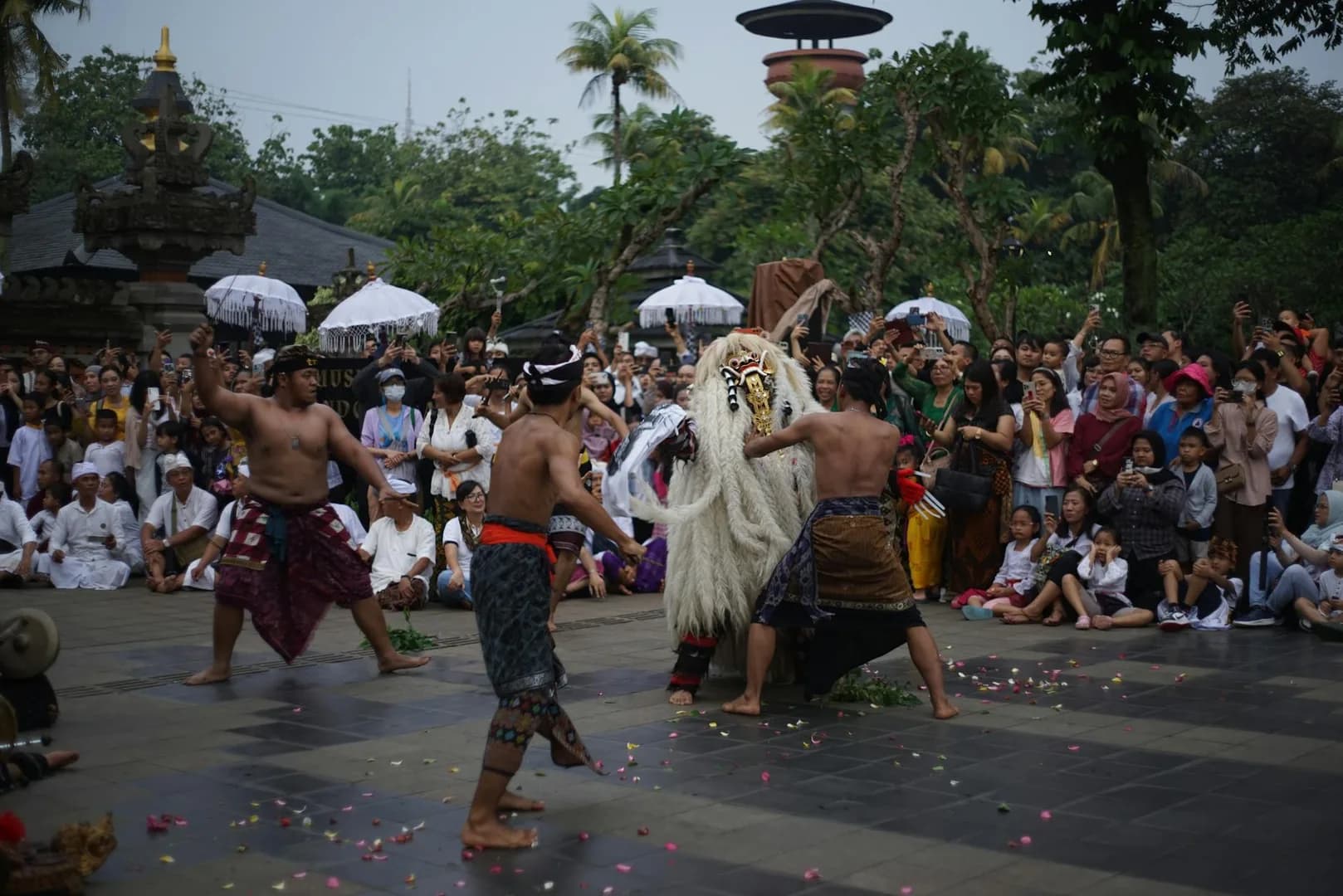
Daily 9:30 a.m., Batubulan village; various venues in Ubud
Barong Dance
Location
Gianyar
Date & Time
Daily 9:30 a.m., Batubulan village; various venues in Ubud
A sacred dance-drama depicting the eternal battle between Barong — the lion spirit of good — and the witch Rangda. Performed in Batubulan and Ubud, this is among Bali's most important ritual performances.
The Barong and Rangda performance is one of the most ritually significant forms of Balinese dance-drama, enacting the eternal cosmic battle between dharma (goodness) and adharma (evil) in a form that is simultaneously theatrical entertainment and genuine religious ceremony. Unlike purely secular dance forms, the Barong performance is conducted with full ceremonial intent — the masks of Barong and Rangda are considered spiritually powerful objects that must be treated with ritual respect before and after use.
Barong is depicted as a fantastical lion-like creature — its mask enormous, gilded, and hung with mirrors and fresh flowers, its body a shaggy costume worn by two dancers working in perfect synchronisation. Rangda, his nemesis, is depicted as a terrifying old widow with a mane of white hair, protruding eyes, and a lolling tongue — her mask is one of the most fearsome objects in Balinese artistic tradition. The performance tells the story of their battle, during which Rangda's magic causes Barong's human followers to turn their keris daggers on themselves — at which point Barong's power makes their bodies invulnerable.
In traditional village performances (rather than tourist shows), the keris self-stabbing (ngerejek) involves real trance states — devotees enter a genuine dissociative state and must be revived by the pemangku (temple priest) using holy water. In the Batubulan morning performances intended for visitors, the trance elements are managed and the performance runs about one hour, showcasing some of the finest costuming and mask carving in all of Bali.