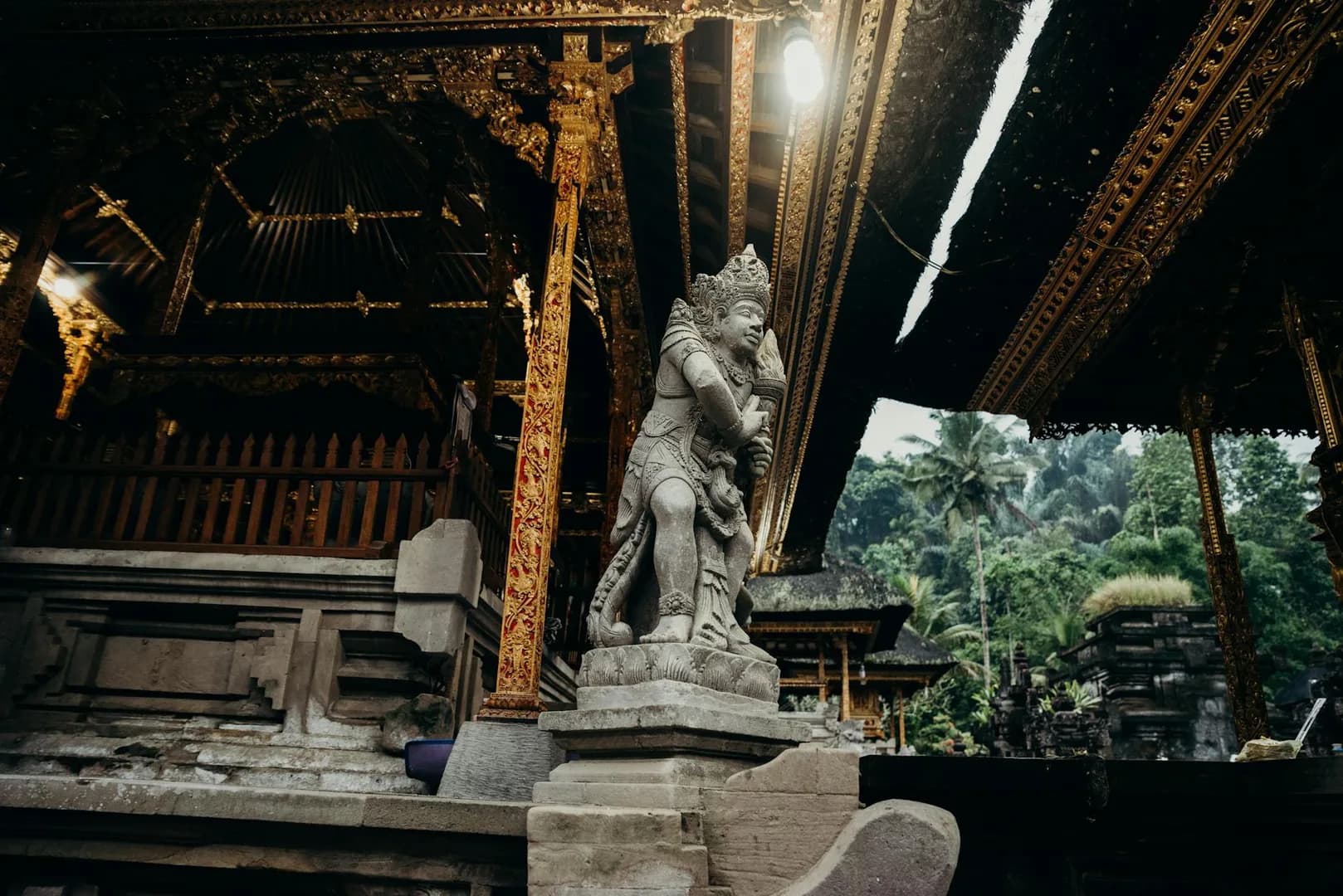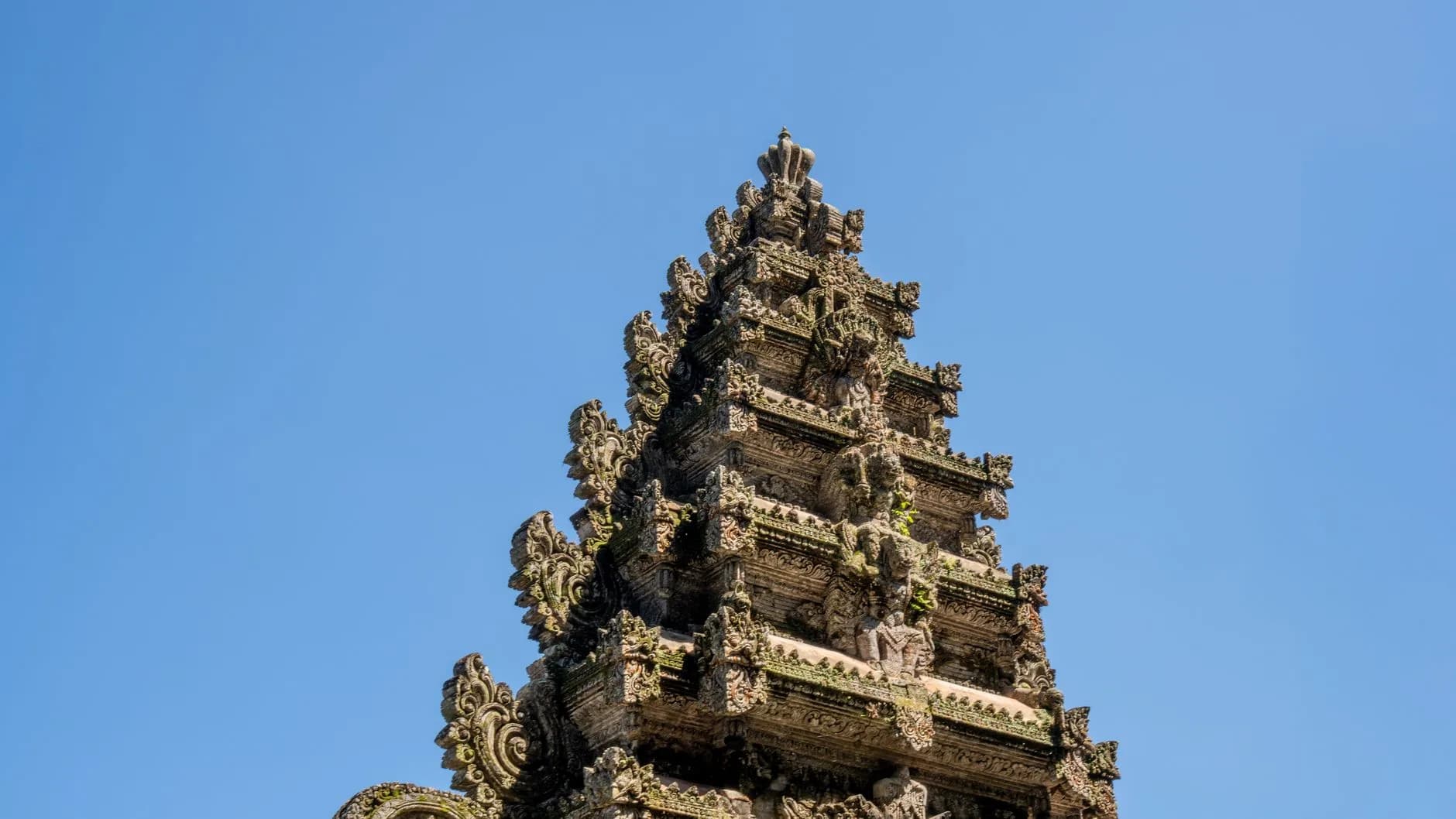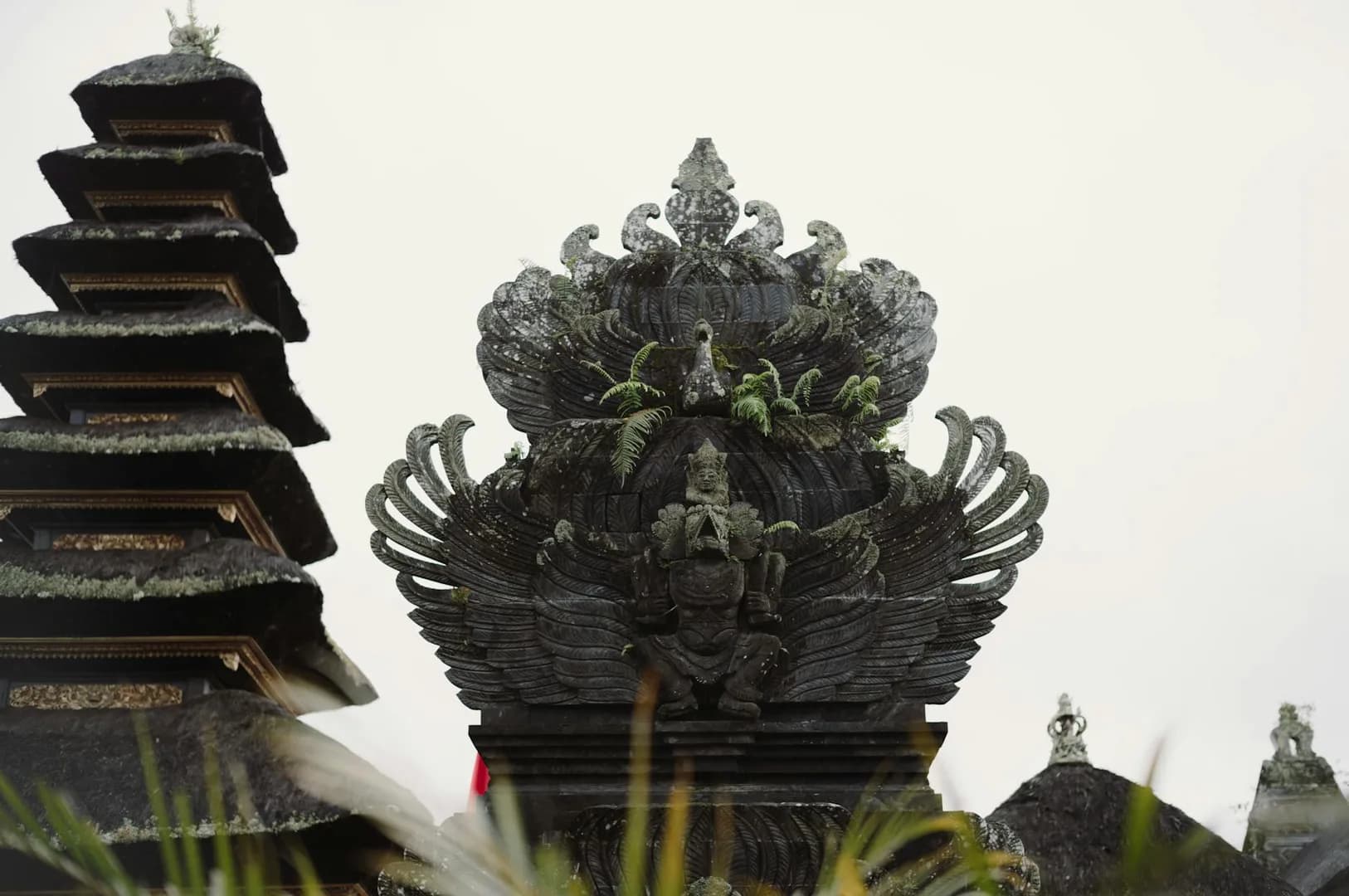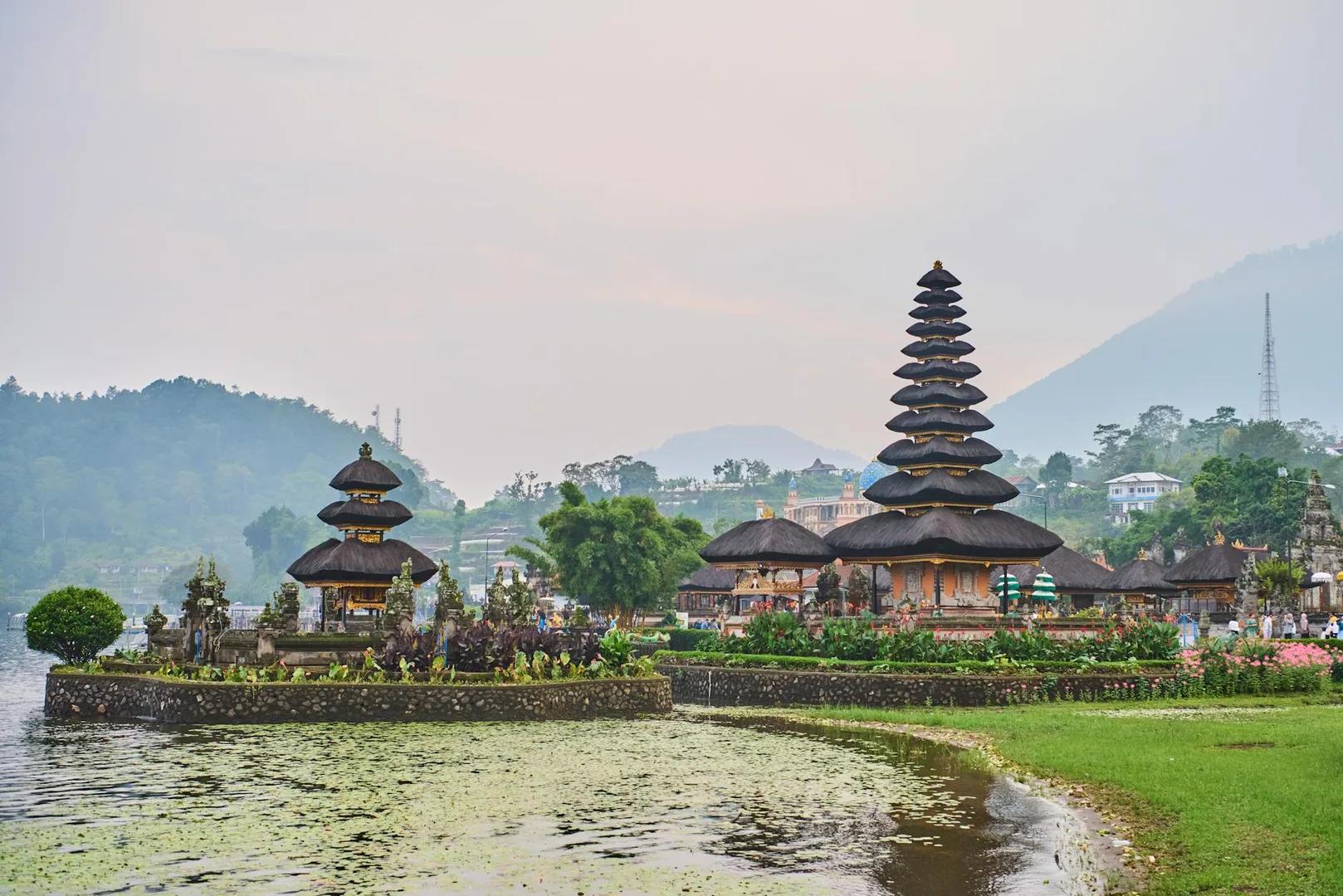
Pura Taman Ayun — "beautiful garden temple" — was built in 1634 by I Gusti Agung Putu, the founding king of the Mengwi Kingdom, and remains the state temple of his royal lineage. It stands within a wide, water-filled moat that gives the impression of a floating temple — the inner courtyard's multi-tiered meru shrines and split gates reflected perfectly in the still water when conditions are calm. The temple is a masterpiece of Balinese spatial design. The outer gardens are open to visitors and surround the moat with manicured lawns, frangipani trees, and stone carvings. The innermost courtyard — reserved for worshippers — contains eleven multi-tiered meru towers ranging from 3 to 11 tiers, each representing a different deity of the Mengwi royal pantheon, along with two towering gedong (closed shrines) and numerous smaller shrines clustered around the central courtyard. UNESCO inscribed Pura Taman Ayun as part of the "Cultural Landscape of Bali Province" World Heritage Site in 2012, recognising it as a key node in the subak irrigation governance system that links Bali's rice agriculture to its Hindu temple network. The temple is at its most atmospheric during the large Odalan festival, held every 210 days according to the Balinese calendar — the courtyards fill with worshippers in ceremonial dress and the air resonates with gamelan music.
Discover Bali
Loading latest insights and destination guides...