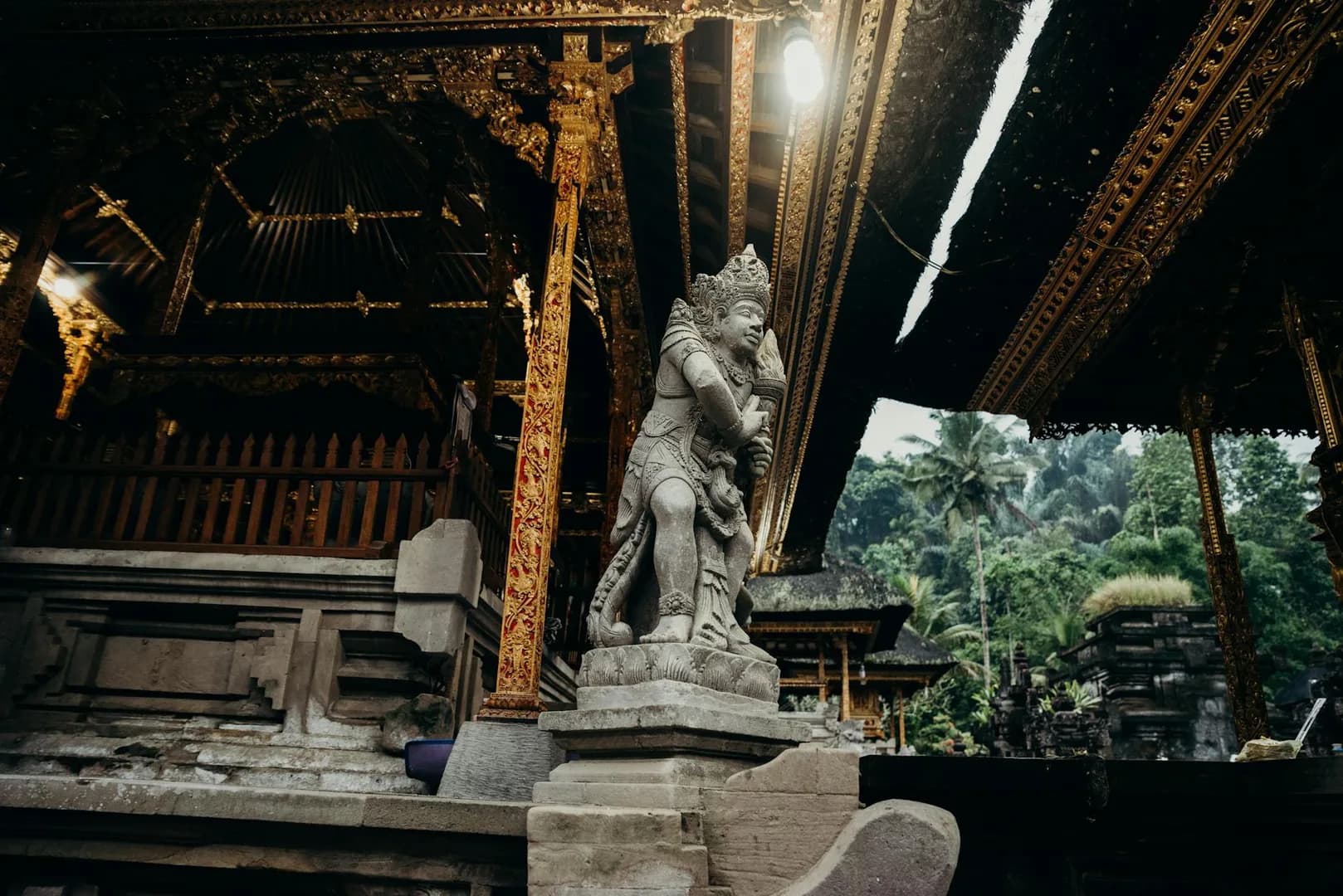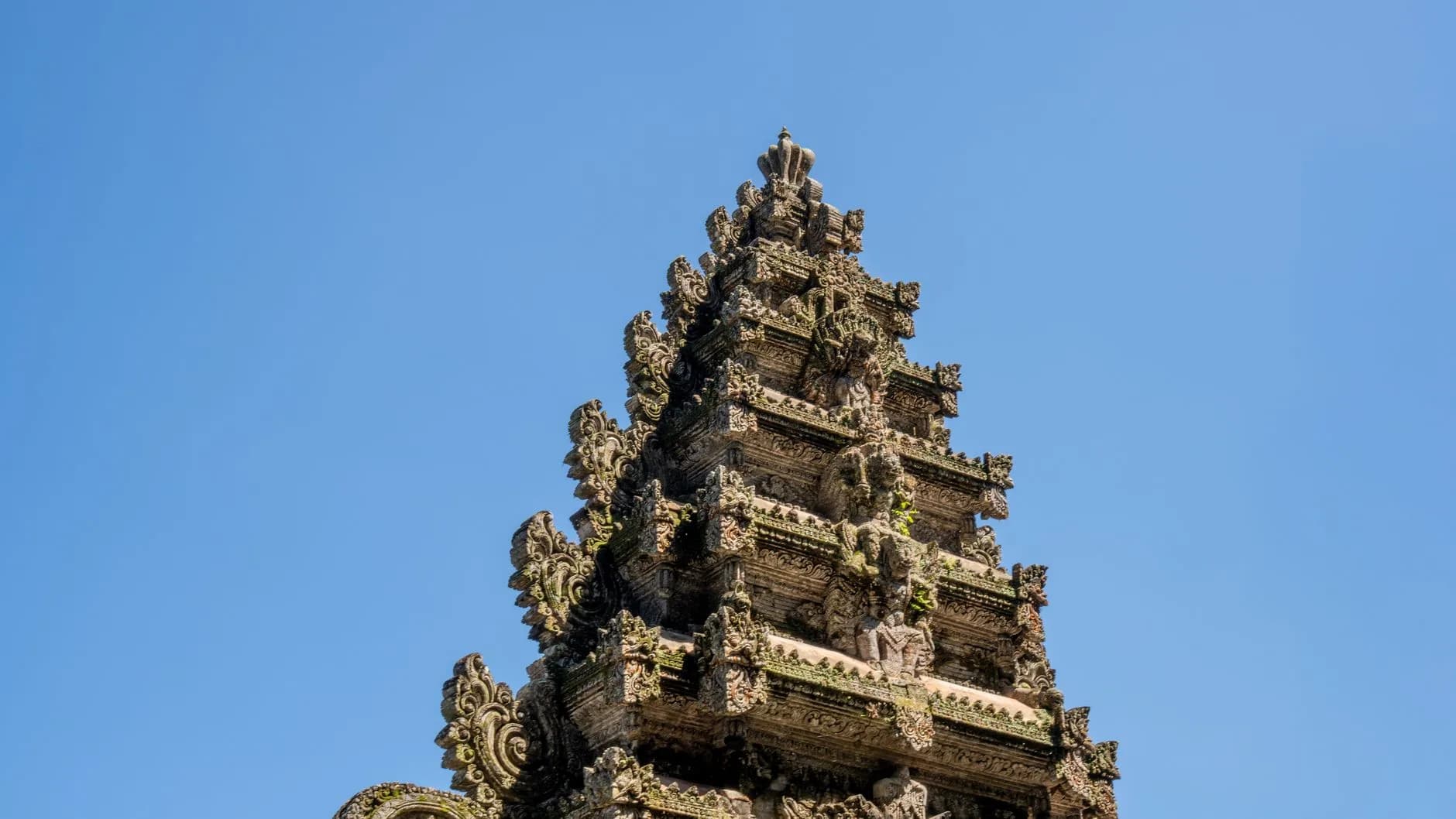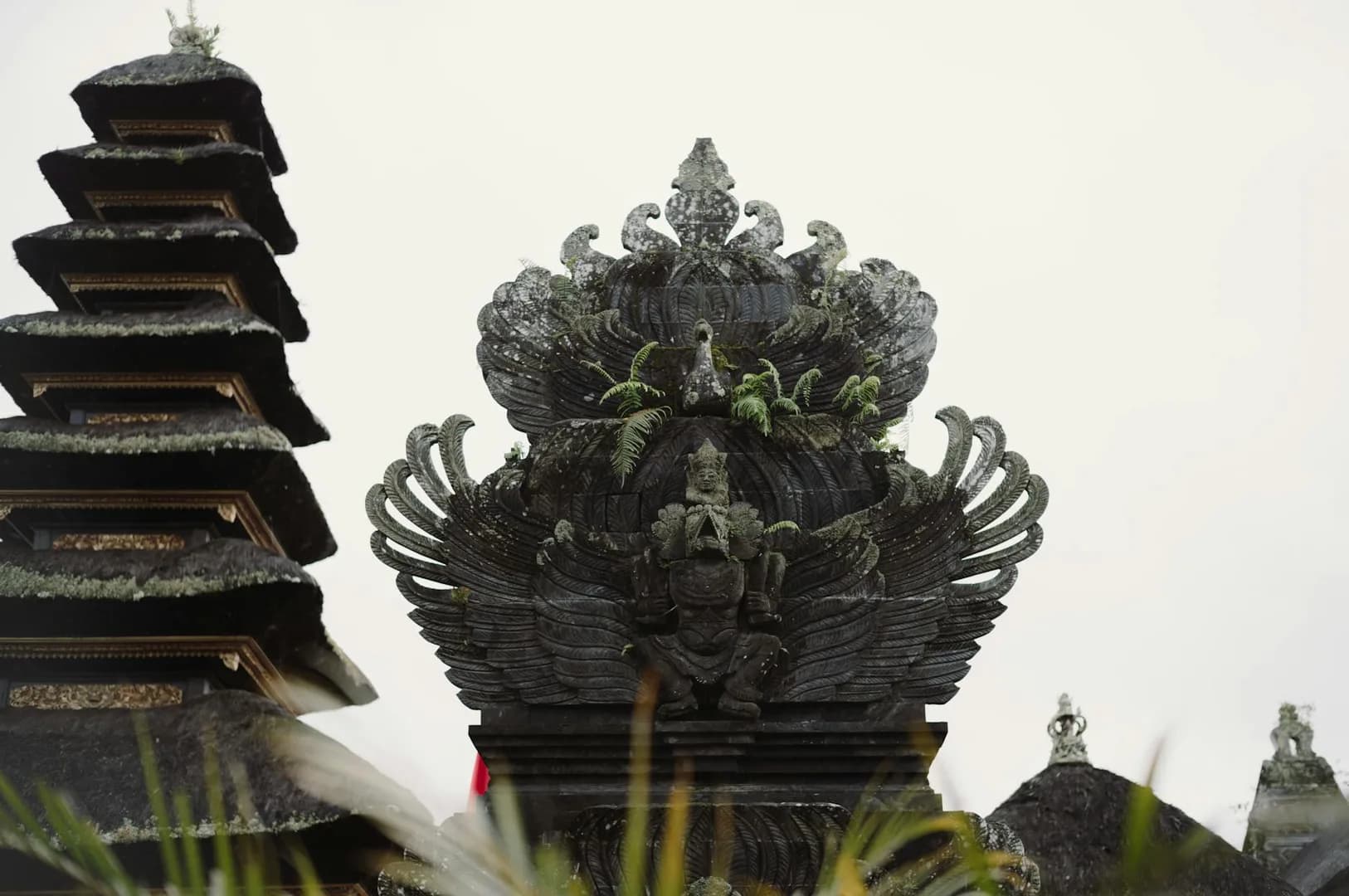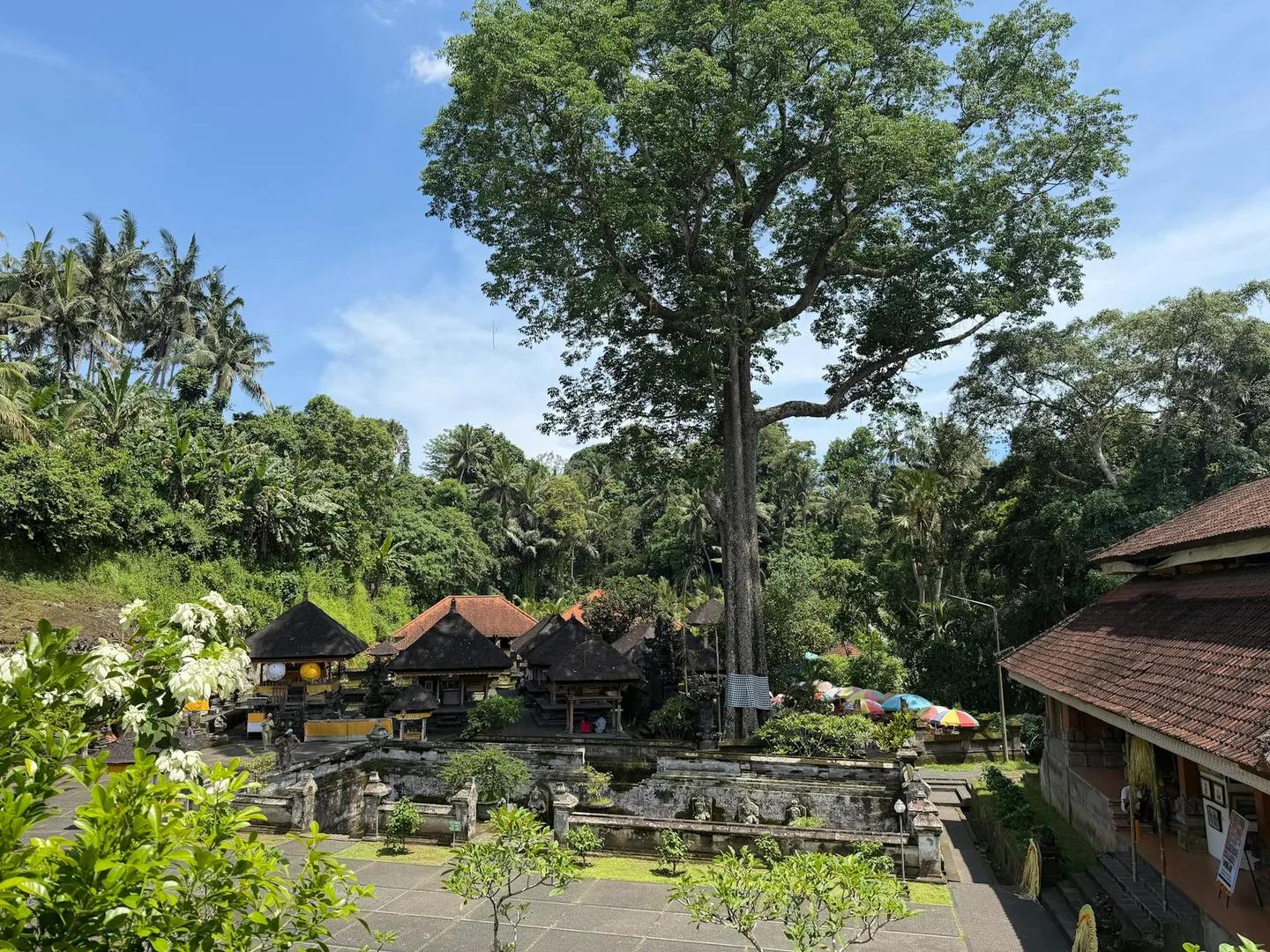
Goa Gajah — the Elephant Cave — is a rock-cut Hindu-Buddhist sanctuary carved into a riverside cliff near Bedulu village, approximately 4 kilometres east of Ubud. Scholars date its construction to the 11th century during the Warmadewa dynasty, though the site's use for Hindu and Buddhist meditation predates the cave itself. The name "Elephant Cave" most likely derives from Gajah Mada, the 14th-century Majapahit prime minister, rather than from elephants — though the cave mouth's carved demon face (kala) was mistaken by early Dutch archaeologists for an elephant's head. The cave entrance is dominated by this enormous carved demon face, its gaping mouth serving as the doorway. The figure is surrounded by intricate reliefs of deities, raksasa demons, and forest scenes — one of the most accomplished examples of ancient Balinese stone carving. Inside, the cave branches into a T-shape, with niches containing a Ganesha figure on the left and three lingga (Shiva phalluses) on the right, used in active worship to this day. In front of the cave, two rectangular bathing pools with elaborate carved fountains — rediscovered only in 1954 during archaeological excavations — are fed by underground springs. The water from these springs is considered holy and is used for ceremonial purification. The pools are flanked by seven female figures (dewi) pouring water from jugs — an exceptional example of classical Balinese water-temple sculpture.
Discover Bali
Loading latest insights and destination guides...