What is the significance of Tirta Gangga?
Tirta Gangga means “water from the Ganges” in Indonesian. It’s a royal palace east of Ubud. It has a large and grand water palace with steps to enter. Its pools have holy water, believed to have healing powers. People come here for festivals and ceremonies—to dip in the pools and honour their spiritual meaning. Balinese people believe it protects them from evil spirits, bad luck and illness.
The main attraction of Tirta Gangga is its water garden pond with fountains and cascades. The pools are connected by traditional water channels used for irrigation. There are ornamental fish in some of the pools. Food is provided on entry to feed the fish.
Tirta Gangga is one of the best examples of Balinese culture and traditional architecture—with carved pillars, archways and statues of gods. They line the palace’s pathways.
Origin & History
Tirta Gangga was constructed in 1946 by the late King Anak Agung Anglurah Ketut Karangasem, the king of Karangasem. It was designed as a place of worship and meditation for the royal family. Its grounds are spread over a large area with lush gardens and pathways. It is still beloved by the Balinese today.
The palace has its roots in an ancient belief system. Some suggest it was built in the 8th century AD, dedicated to Dewi Danu or Shiva. It has been passed through many hands throughout the years.
The palace suffered significant damage during World War II when Japanese soldiers occupied it. The palace was left in ruins for many years until the Indonesian government restored it in the 1970s. Now, it is managed and maintained by members of the local regency council.
What to Do in Tirta Gangga Water Palace
The Tirta Gangga Water Palace is one of Bali’s must-see temples and attractions. There are aquamarine pools, fish ponds, and some beautiful Hindu and Buddhist statues. The architecture and religious symbolism of the palace are well worth seeing for a day trip or within a tour of East Bali.
Let’s look at what you can do in the Tirta Gangga Water Palace.
Take a tour of the palace.
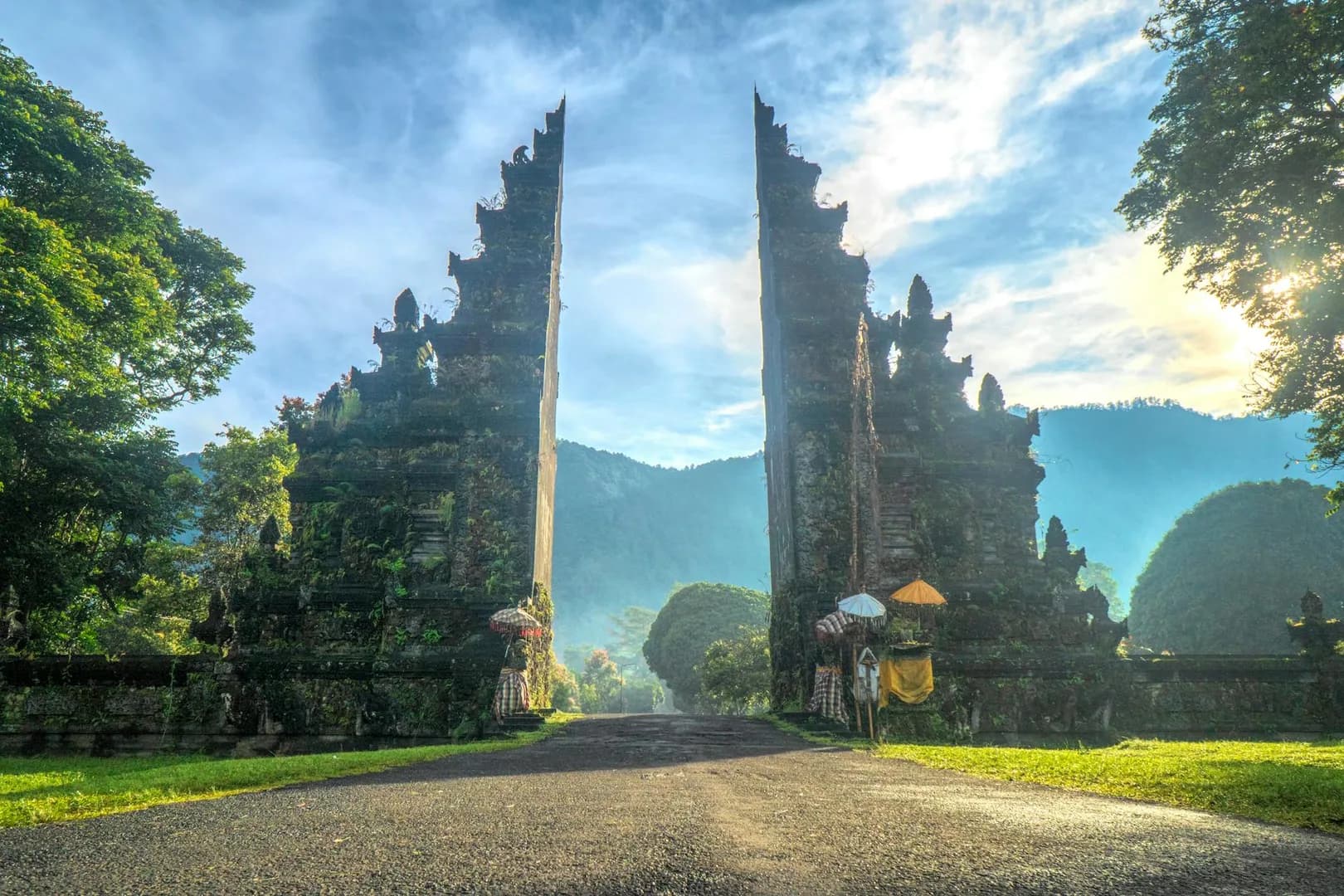
You are welcome to explore the water palace at your own leisure and pace but to learn more about its history and significance, book a guided tour by one of the guides. As you walk into the palace, you will be welcomed by two towering gates at the entrance of a long pathway. Fountains feature seven statues of characters from Balinese mythology. Ornate pavilions with prayer flags hang from their eaves. Unusual stone sculptures showcase Hindu gods carved into them. Plants, trees, and shrubs surround beautiful koi ponds.
Explore the gardens
Explore the lush gardens around the palace. You’ll find exotic plants and statues of kings from centuries ago. Paths lined with lotus ponds and grassy spots – take pictures or enjoy the serenity.
The palace walls have ten divisions of Balinese garden architecture – pools and shrines connecting the park to its larger landscape. There are three necklaces (tera), shellfish-horned walls (kala-makara), terraces, archways, and pavilions.
Take a dip in the pool.
Within the water palace, the fountains are not for swimming. However, there are pools where visitors can enjoy a cool dip in the spring waters. Tirta Gangga boasts two rectangular pools with carved stone steps leading down into them. The inner pool was built for the royal family and guests.
The pools offer a tranquil atmosphere, surrounded by lush greenery and yellow frangipani flowers. Visitors can explore the gardens, the deep river-like bottom and the underwater rock formations. The crystal clear water is free of chlorine and other chemicals. Soap is strictly forbidden, and visitors must wear appropriate clothing within the pool.