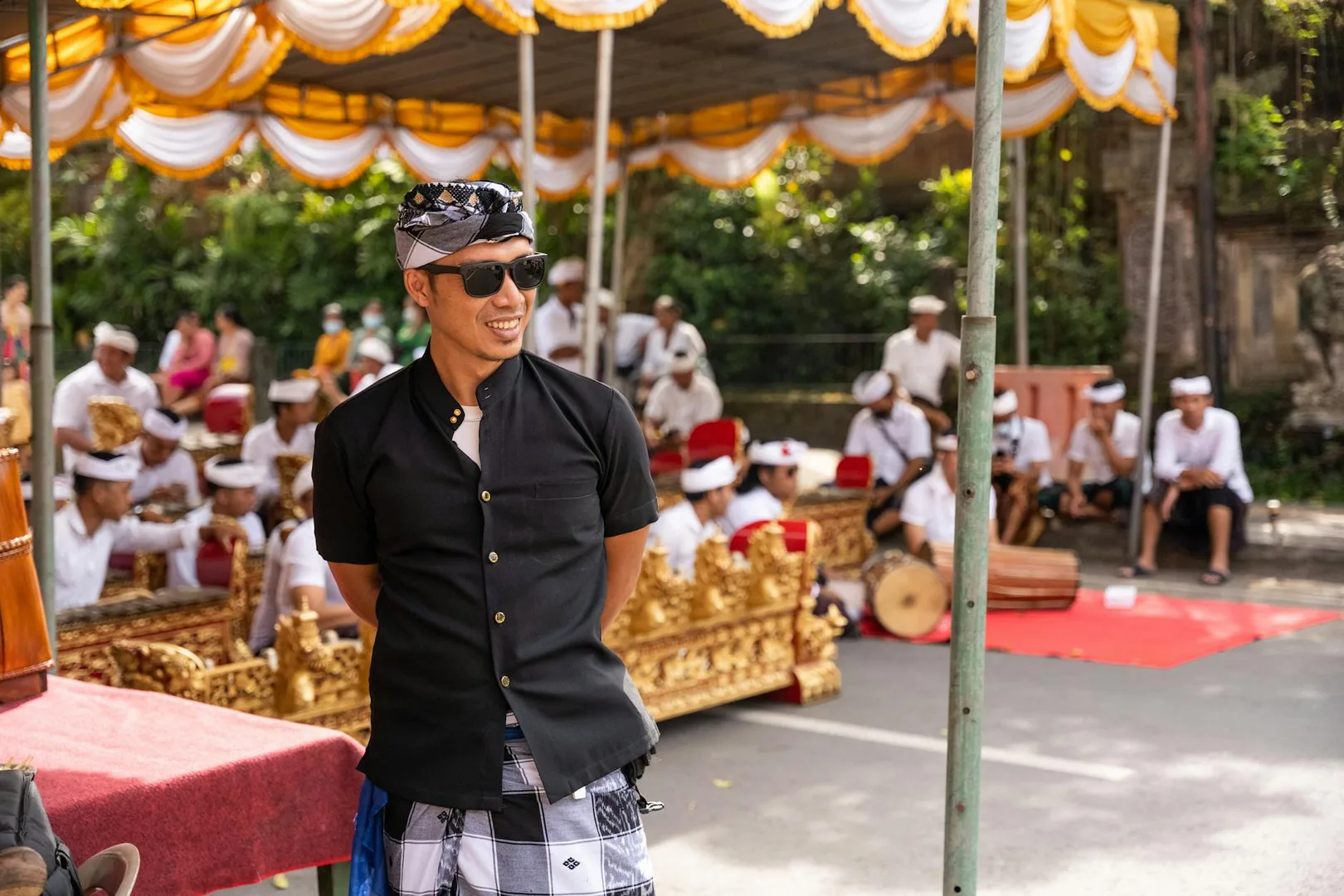
Puri Saren Agung — the Great Royal Palace — has stood at the junction of Jalan Raya Ubud and Jalan Suweta since the 17th century. The current structures were largely rebuilt after the 1917 earthquake under the patronage of Cokorda Sukawati, with significant input from the German artist Walter Spies, who lived in a pavilion within the palace grounds during the 1930s and helped establish Ubud as an international centre for Balinese artistic revival. The palace's outer gate (candi bentar) opens directly onto Ubud's main road, and the ritual courtyard inside is visible from the street — a deliberate architectural openness that reflects the Ubud royal family's tradition of cultural patronage and public ceremony. The pavilions (bale) are built in classical Balinese court style, with carved sandstone columns, black thatch roofs, and elaborate stone reliefs depicting scenes from the Ramayana and Mahabharata. Each evening at approximately 7:30 p.m., the main courtyard hosts a legong dance performance — considered by many visitors to be the most beautiful dance performance available in Ubud, both for the skill of the dancers and for the setting of carved stone lit by kerosene lamps. Tickets are available at the entrance. The palace is also active as a working royal compound: Balinese royal family members still reside here and conduct temple ceremonies in the inner sanctuaries closed to visitors.
Discover Bali
Loading latest insights and destination guides...